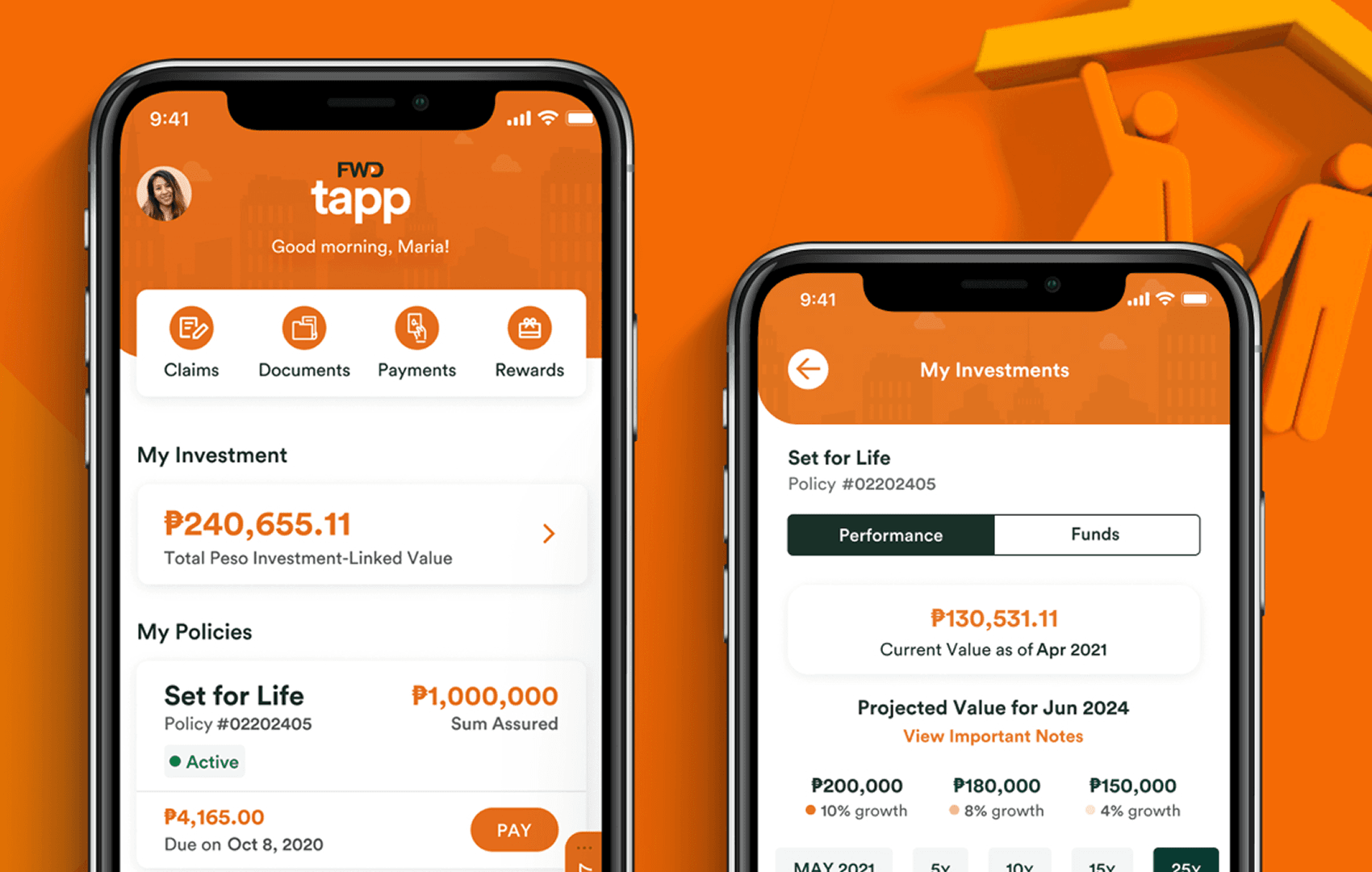
FWD Tapp: Making Insurance Effortless
Redesigned FWD's digital insurance app to simplify policy management, payments, and investments for everyday users.
UI/UX Designer
Multi-release
2020
Insurance
Impact at a glance
50%
Adoption rate
+66
Net promoter score
40%
Support calls
Reduction
Problem
Initial requirements focused on improving self-service flows such as payments, claims, and policy viewing.
But research sessions and workshops revealed a consistent behavior: users repeatedly checked the same information — policy status, coverage amount, payment confirmation — even after completing actions.
They weren't trying to do more. They were trying to be sure.
We reframed the goal from enabling insurance transactions to providing continuous certainty. The product needed to function less like a tool and more like a reassurance system.
Approach
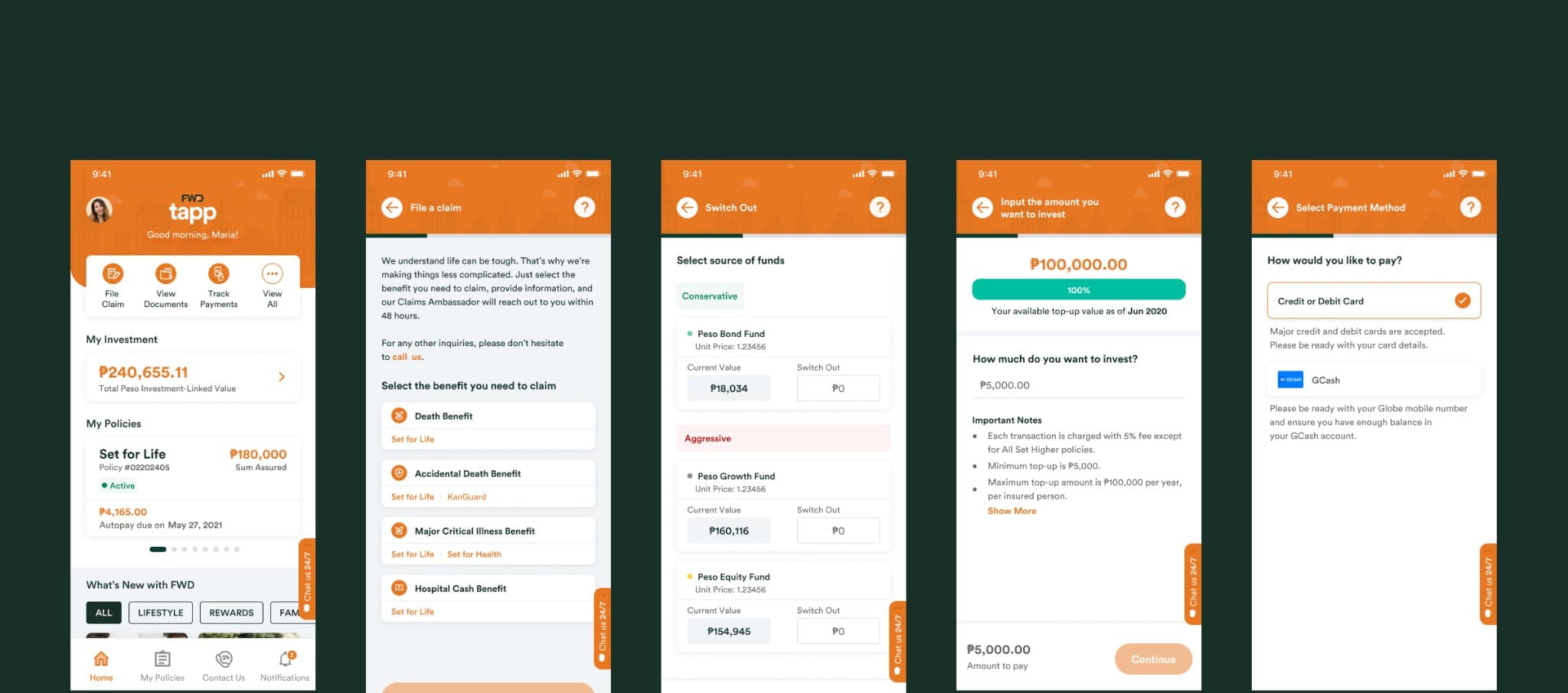
To support reassurance, we evaluated how the app communicates state.
Typical service apps are action-centric — they help users complete tasks quickly. But insurance confidence comes from visibility, not speed. Users need ongoing confirmation that they are covered right now.
Instead of optimizing flows individually, we structured the experience around persistent verification signals:
- Policy status
- Protection amount
- Payment standing
- Available services
This shifted interactions from task completion to confirmation.
Guiding principle
“Every major screen should answer the question: "Am I protected at this moment?"”
Solution
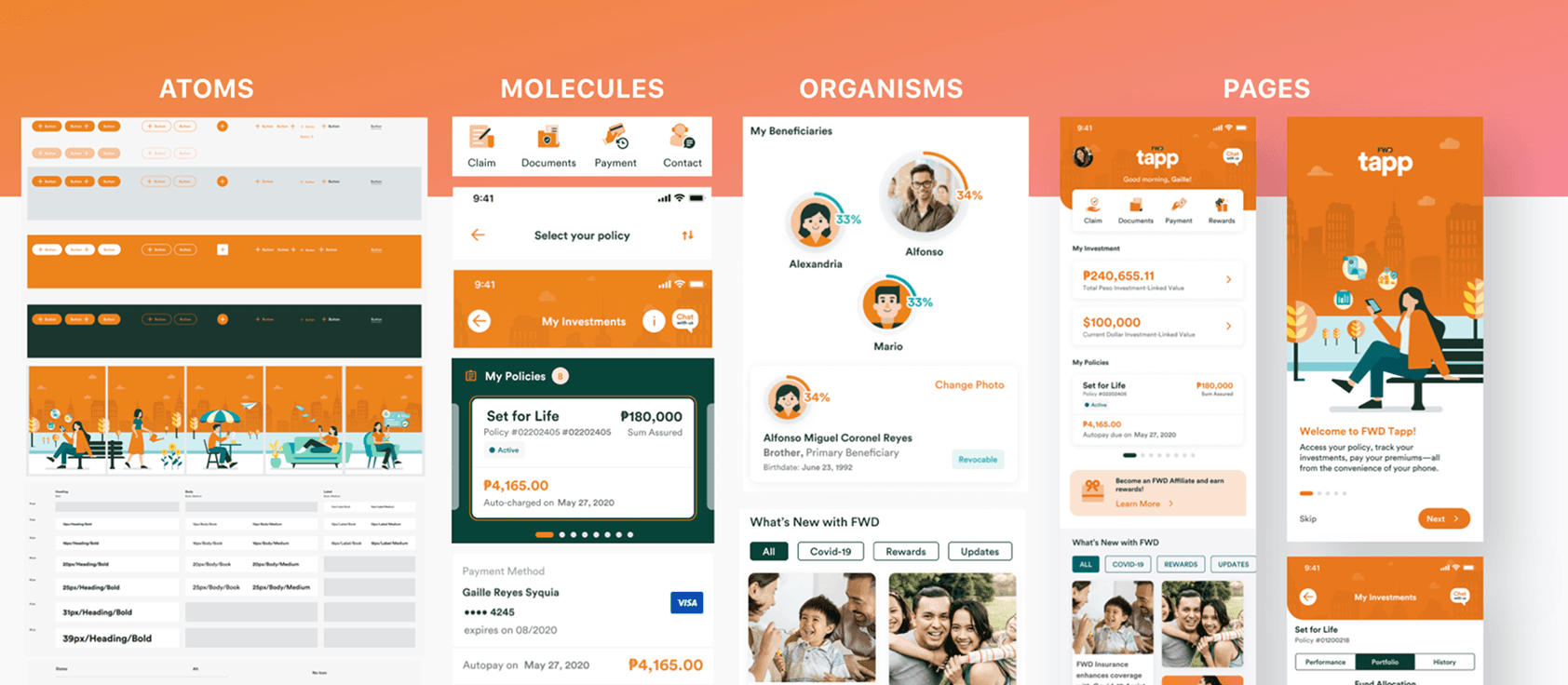
The app experience was reorganized around reassurance loops rather than isolated services.
By centering the interface on verification instead of navigation, the product shifted from a servicing portal into a confidence tool.
- Always-Visible Coverage: Policy status and protection values were surfaced immediately so users could confirm coverage without navigating across multiple pages.
- Action Confirmation: Payments, claims, and updates emphasized completion certainty. The system communicated acknowledgment, not just submission.
- Continuous Access to Help: Documents, claims, and support were positioned as safety nets, always reachable and clearly available when needed.
Impact
- The redesign improved more than usability; it changed customer behavior.
- The product succeeded not by encouraging more actions, but by removing doubt.
- Customers no longer contacted advisors to verify information already available in the app, reducing support calls significantly.
- Confidence in the product increased, reflected in higher customer advocacy.
- Adoption grew as the app became a reliable place to confirm protection rather than only complete transactions.
Key learning
“For high-stakes services, usage does not come from adding features. It comes from reducing uncertainty. When users trust the system state, interaction becomes optional and that trust drives adoption.”