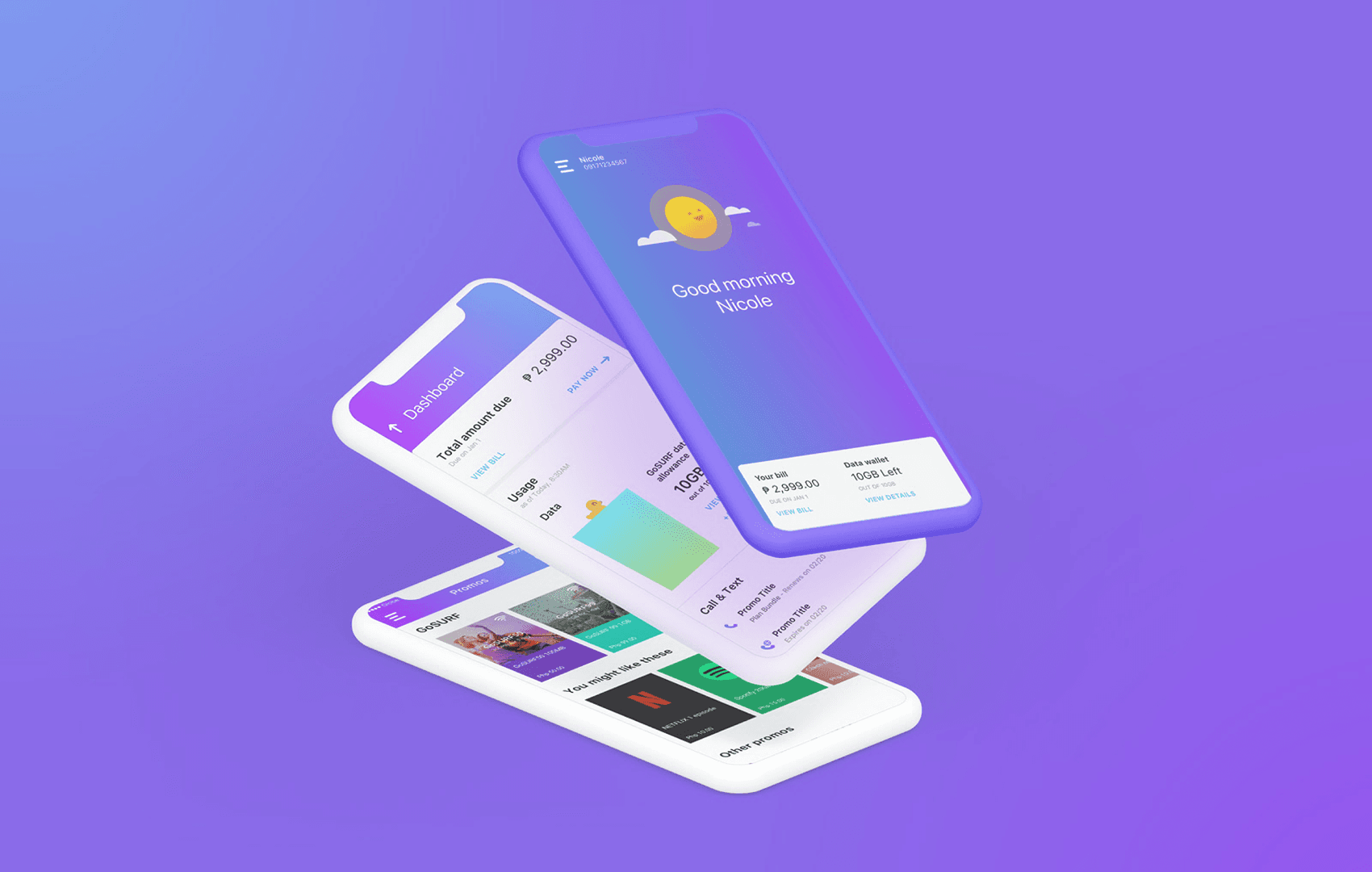
Globe One App: Making Data Transparent and Viral
Unified Globe's fragmented services into a trusted self-service experience powered by cross-channel transparency and the viral Data Duck usage tracker.
Lead UI/UX Designer
Multi-release
2017
Telecommunications
Impact at a glance
22%
Data subscriptions
Increase
65 82
SUS score
3.5 4.5★
App ratings
The solution transformed data tracking from a trust liability into a brand differentiator, with the Data Duck becoming a viral social media phenomenon that strengthened Globe's brand presence.
Problem
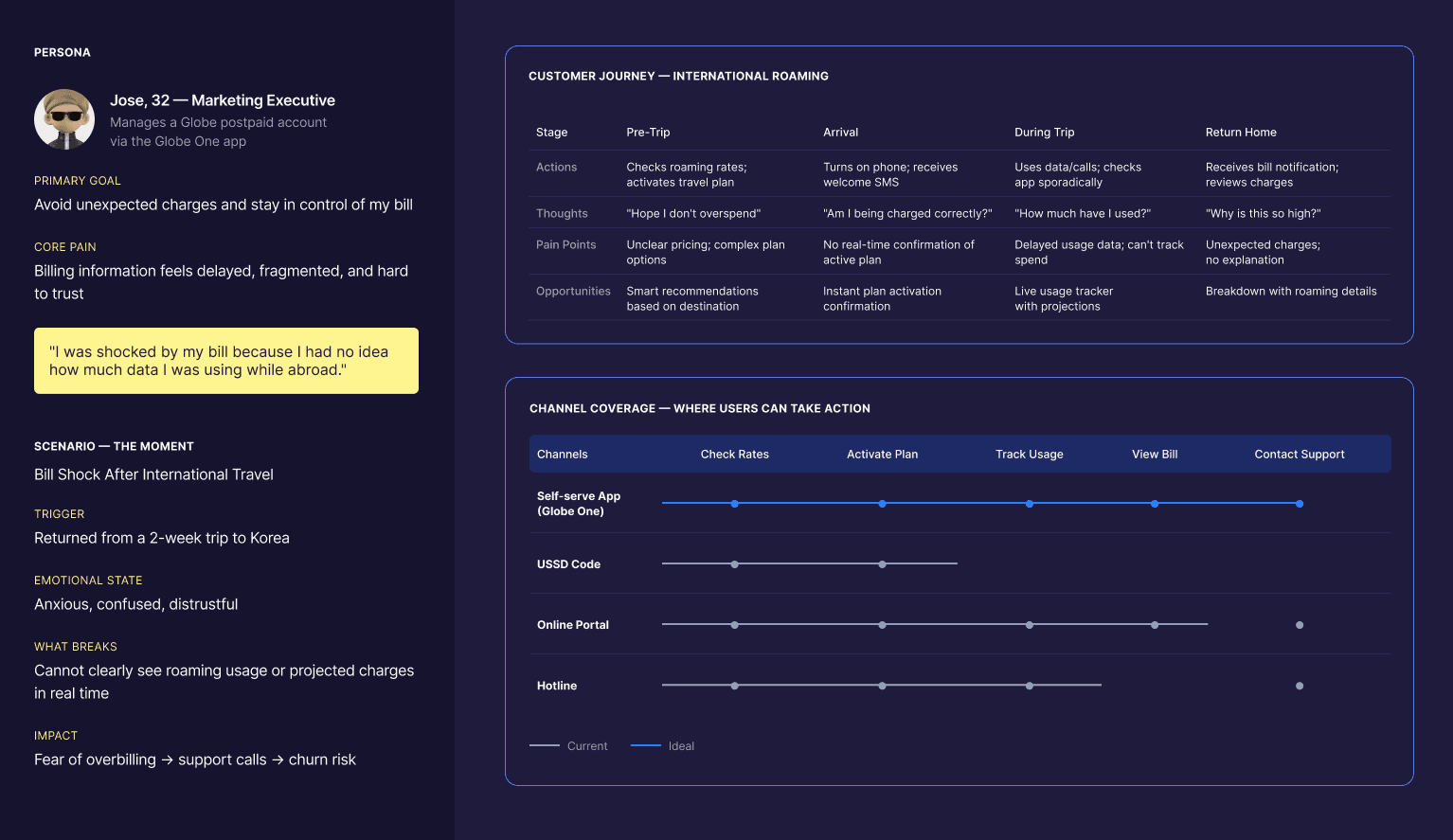
Globe's postpaid customers faced fragmented service across paper bills, SMS, hotline calls, and multiple apps. When bill shock or disputes arose, users had no way to track resolution progress, forcing repeated customer service calls.
- Strategic challenge: Position Globe One as a trusted self-service channel alongside the hotline and USSD (shortcode dialing), moving from low awareness to high trust and daily usage.
- User context: 96% urban business professionals who travel internationally, need control over account management, and want transparency without calling customer service.
- Invisible consumption: Users couldn't see real-time data usage, fueling "nakaw load" (data theft) perceptions
- Cross-channel blindness: Hotline calls about disputes left no trace in the app
- Request black holes: No status visibility after filing complaints
- Baseline: 3.5-4.0 app ratings, SUS score (System Usability Scale) of 65, high hotline call volume, low app engagement
Constraints
- Strategic: Channel orchestration required integration with billing, CRM, hotline logs, and SMS; one inaccurate data point would confirm user skepticism; API costs limited real-time update frequency; character-driven approach challenged corporate brand guidelines
- Technical: Limited animation capabilities, required coded Flinto specs
- Organizational: Product Owner initially opposed non-traditional solutions; needed multi-department approval
Approach
Established trust-building principles from research with 15-20 users aged 20-30: Accuracy of Data (present real, precise information); Proactive Communication (surface notifications before users worry); Multi-Channel Activity Tracking (show evidence of calls, SMS, web activity in unified timeline).
Tested three dashboard strategies:
- De-risking: Explored multiple dashboard concepts; key finding: charts tested well for comprehension but lacked real-time flow visualization that built trust.
Option 1: Account-first dashboard
- Best for
- Task-driven users who open the app with specific intent
- Tradeoff
- Reduced promotional visibility; marketing loses prime real estate
- Risk
- Potential impact on marketing KPIs; resistance from growth teams
Option 2: Promo-led experience
- Best for
- Marketing-led growth initiatives; maximizing subscription conversions
- Tradeoff
- Higher cognitive load for users seeking account info
- Risk
- Increased friction for essential tasks; may worsen trust issues
Option 3: Contextual hybrid ✓ SelectedSelected
- Best for
- Mixed user intents across prepaid and postpaid segments (pay-as-you-go vs. billed plans)
- Tradeoff
- Higher system and logic complexity
- Why it worked
- Dashboard adapts based on user context (bill status, data level, pending requests). When users opened the app anxious about disputes, the dashboard immediately surfaced request status, proving cross-channel tracking worked.
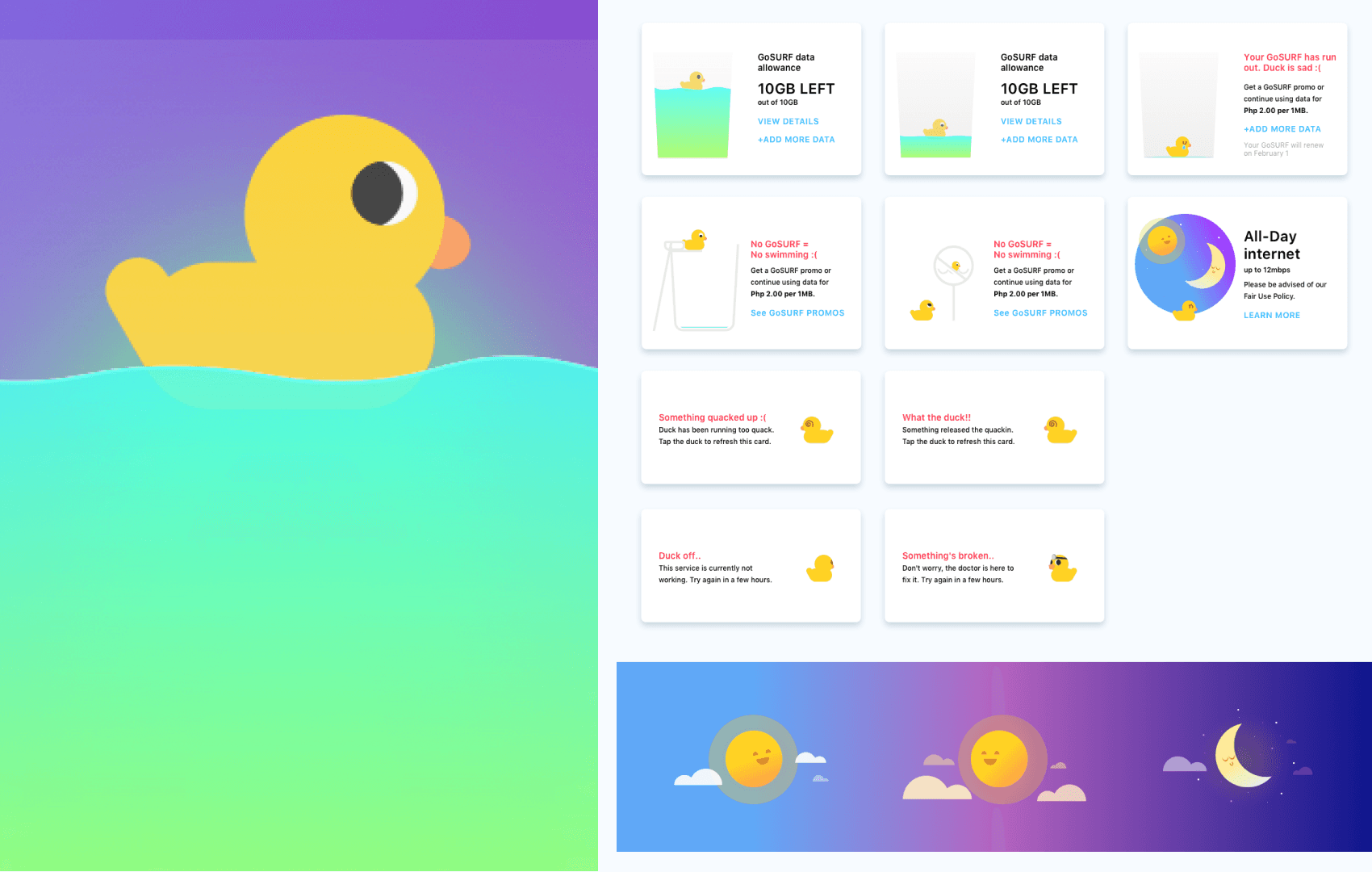
- Applied PET Framework (Persuasion, Emotion, Trust): Low-data CTA (call to action) appeared when users were concerned; duck's expression changed based on data status; liquid metaphor visualized data draining in real-time.
- Designed request tracking: Hotline calls logged automatically, dispute status with timelines, payment confirmations, and cross-channel activity in unified inbox. The signature moment: seeing a recent hotline call appear in the app with active tracking convinced skeptics.
- Built coalition before final approval: Secured consumer, business, and marketing team buy-in with research data before presenting to Product Owner.
Key Decisions
- Contextual dashboard over fixed hierarchy: Dashboard adapts to user context. Crisis mode users saw request status immediately, not promos.
- Character-driven approach over traditional meters: Created emotional connection; user testing validated it wouldn't feel childish.
- Liquid visualization over static charts: Users needed to see consumption happening in real-time; liquid flow created intuitive feedback.
- Coalition-building before final approval: Secured cross-departmental buy-in first, turning resistance into sponsorship.
Solution
A unified self-service experience built on cross-channel transparency.
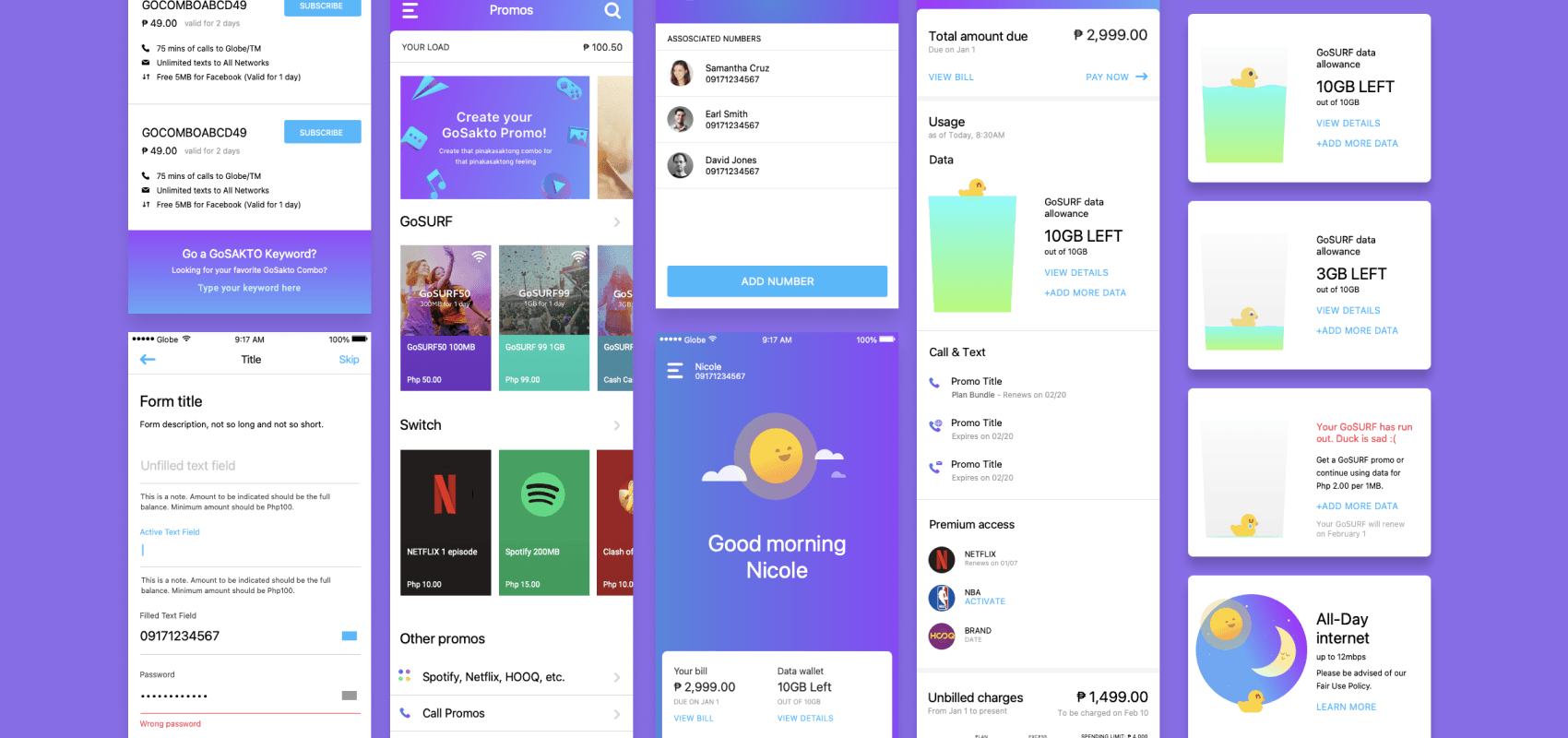
- Request Tracking & Cross-Channel Visibility: Hotline interactions appeared in app timeline immediately; status tracking with estimated resolution times; unified inbox for SMS, messages, request updates; proactive push alerts when requests completed.
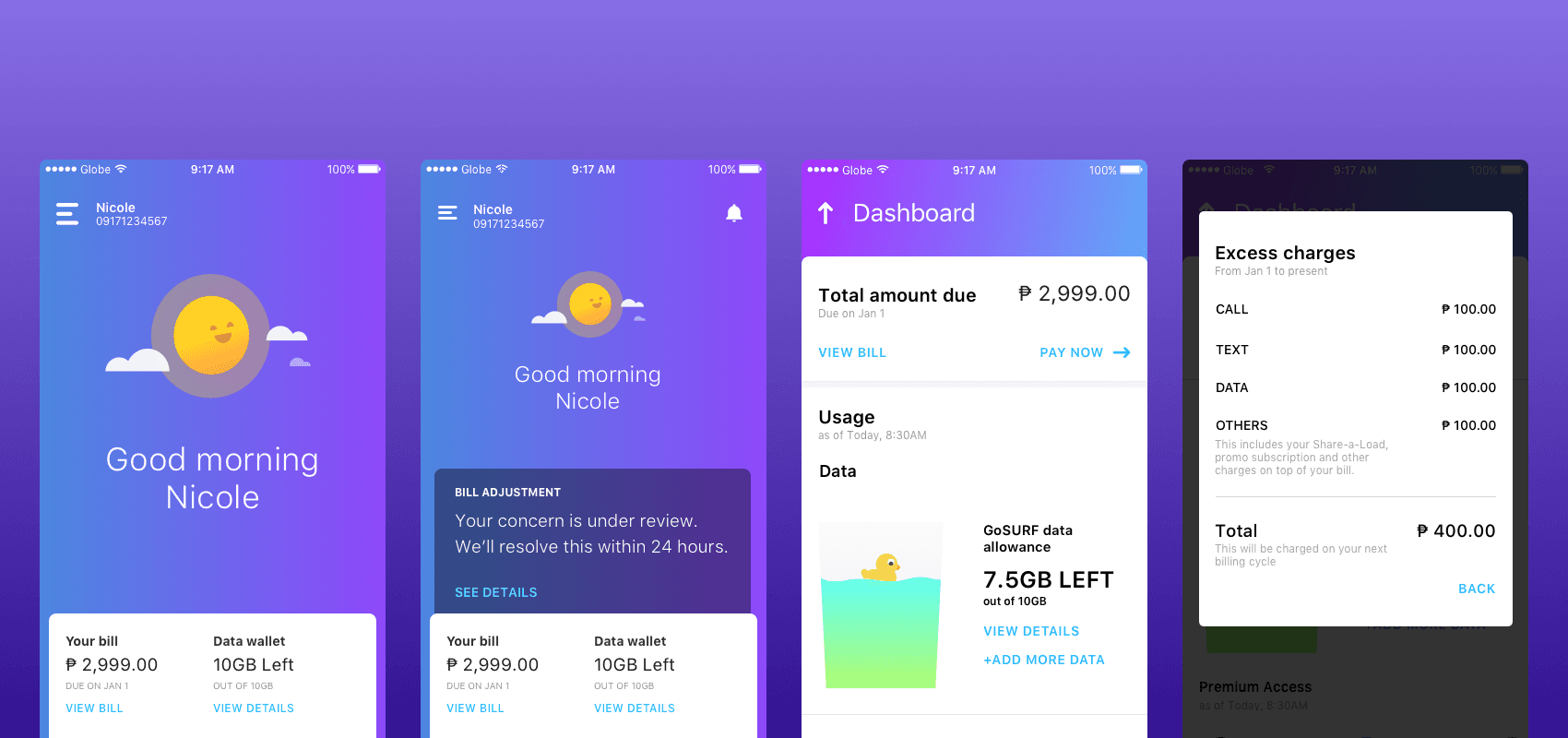
- Transparent Bill Management: Clear breakdown of charges with expandable explanations; in-app dispute flow with real-time tracking; credit card and GCash (mobile wallet) payment with instant confirmation.
- The Data Duck ★ Viral breakthrough: Liquid visualization (real-time data depletion as fluid draining); expressive character (duck's expression reflected data status: happy – concerned – alarmed); smart CTA (low-data prompt drove 30% of incremental subscriptions); viral design (playful aesthetic became organic brand moment).
- Self-Service Account Management: Profile editing, plan comparison, content activations, rewards redemption.
- Implementation: Collaborated with engineering using Flinto for coded animation specs. Prioritized essential interactions over decorative elements. Built design system with status indicators, timeline visualization, and notification templates.
- Why it worked: Cross-channel tracking proved the app reflected reality; Data Duck made consumption comprehensible through feeling, not just numbers; contextual dashboard surfaced urgent issues immediately; multiple touchpoints created reasons for habitual checking.
Signature moment
“Trust was built in motion. The Data Duck's fluid animation made data usage feel continuously consumed in real time, not suddenly depleted, while real-time report statuses showed issues actively being worked on. Seeing progress unfold turned skeptics into believers.”
Key lesson
“Belief scales when it's shared early. Forming a cross-department coalition and backing the experience with research data created early trust, aligned stakeholders, and secured buy-in before presenting to primary decision-makers.”
Outcome
- Quantitative: 22% increase in data subscriptions within 1 month; 30% of incremental subscriptions from low-data CTA; SUS score 65 82 (Marginal Excellent); app ratings 3.5-4.0 4.0-4.5 stars
- Qualitative: Data Duck went viral on social media; reduced "nakaw load" (data theft) support tickets; hotline call deflection for bill inquiries; cross-departmental KPI improvements
- Strategic positioning: Globe One moved from low awareness to complementary channel alongside hotline and USSD. Users began checking the app first, exactly the behavioral shift intended.
What I'd Do Next
- Expand trust infrastructure: Real-time sync indicators, call transcripts in app, proactive issue alerts before users notice.
- Deepen orchestration: SMS-to-app deeplinks, store visit integration, web-to-app continuity.
- Measure long-term trust: 3-6 month longitudinal study tracking sustained trust and retention impact.
- Scale character design: Expand Data Duck states for different scenarios, add explainability for unexpected data changes.